
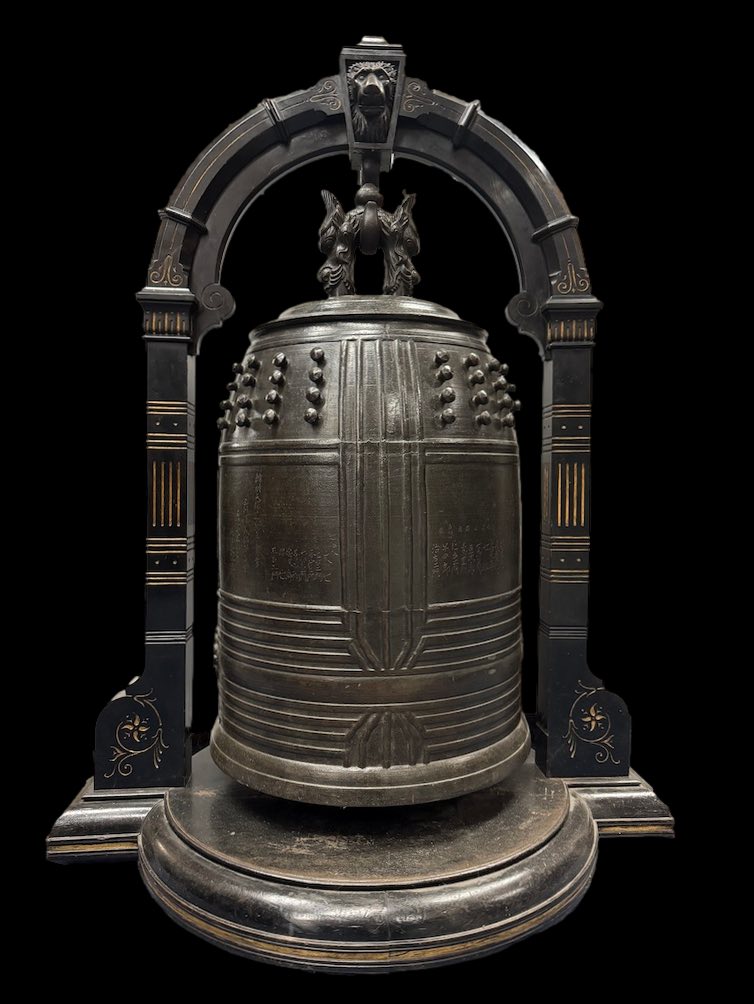

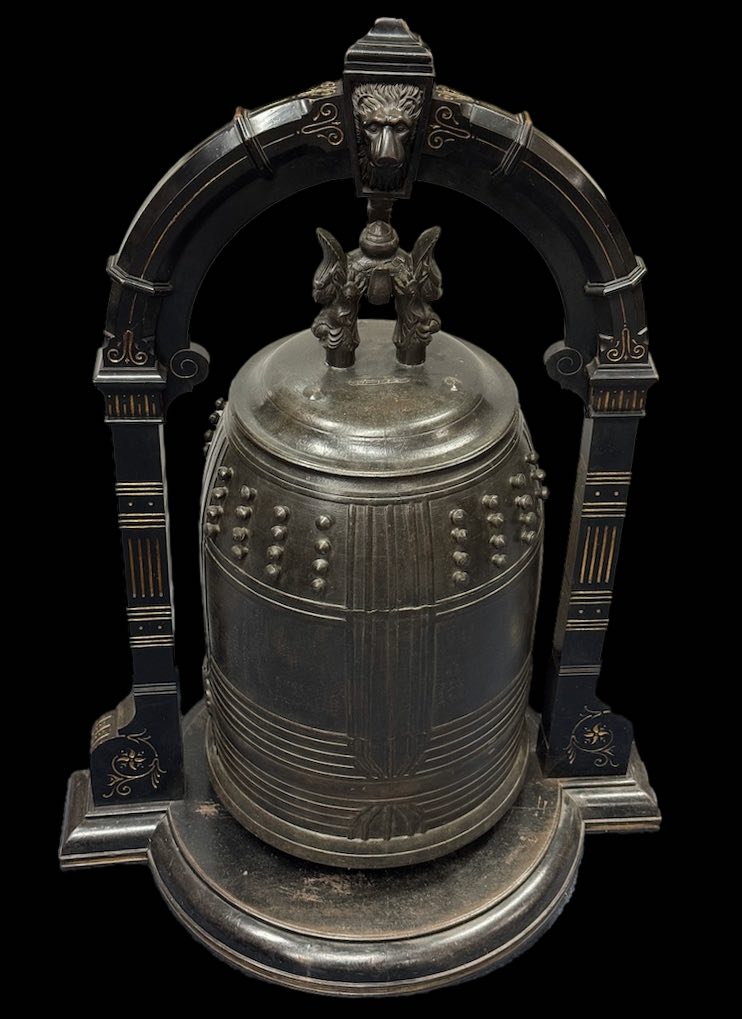

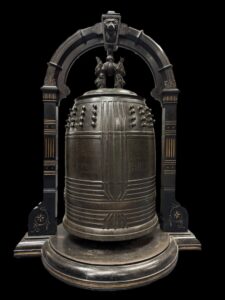
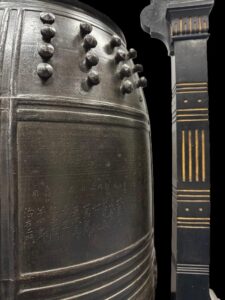
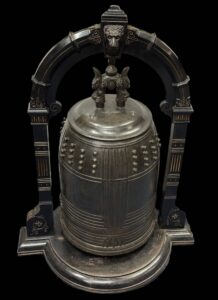
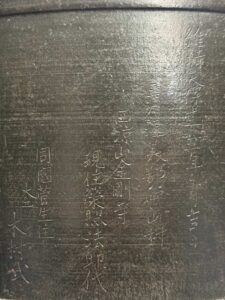


Antique Japanese Edo Era Bronze Hanging Bell (Hanshō)
Description
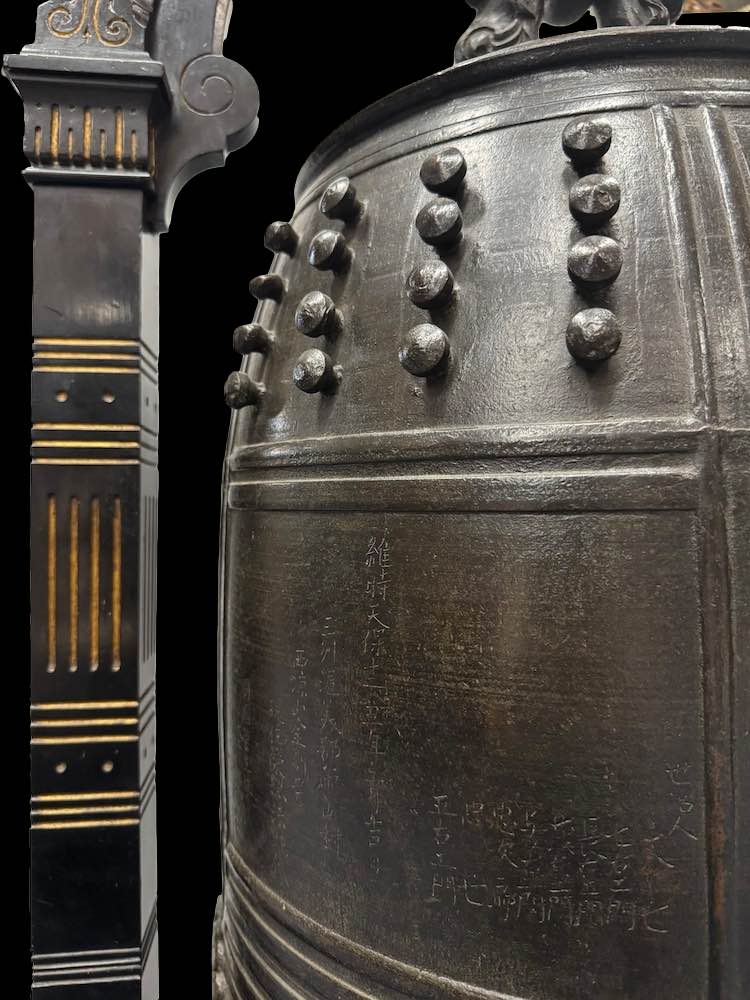
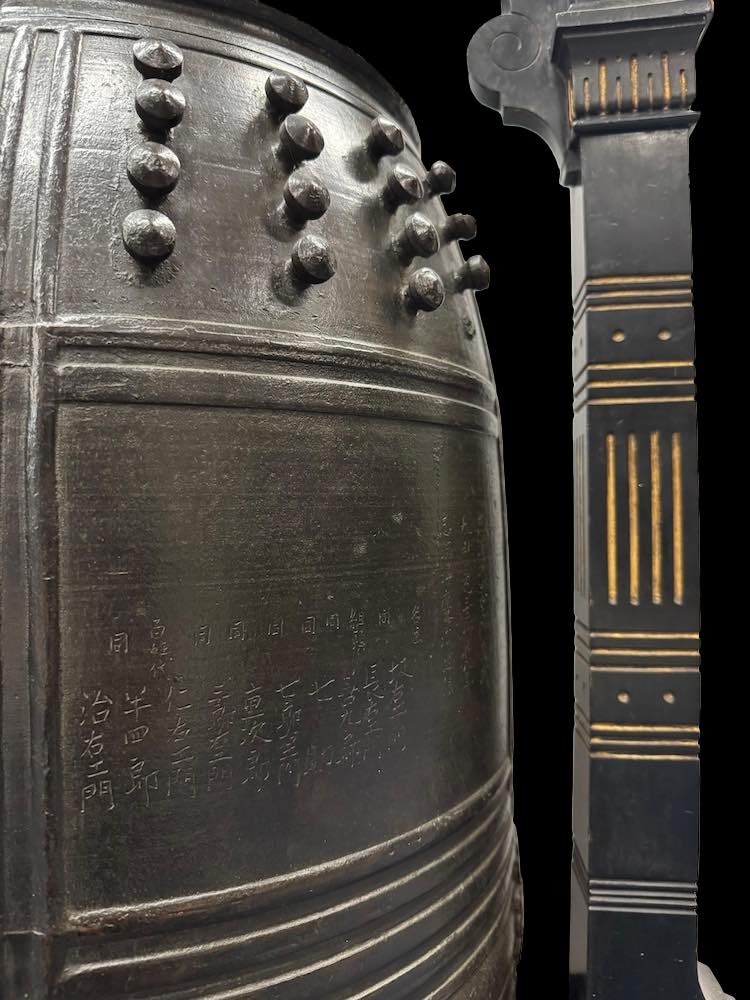
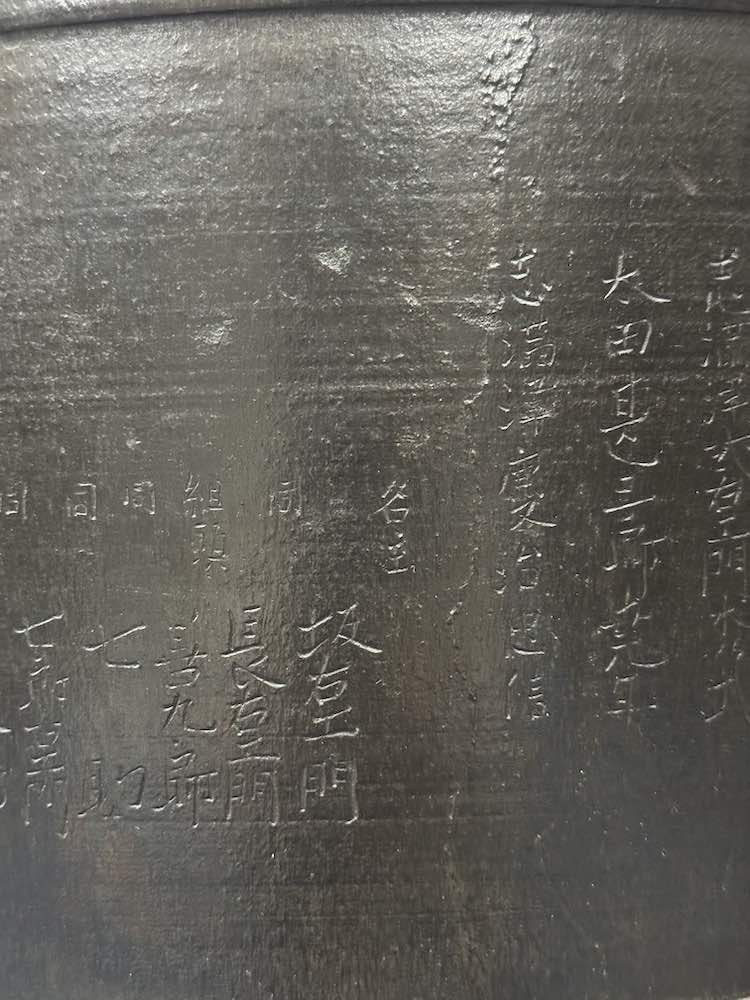
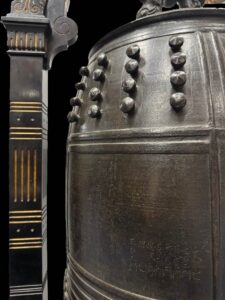
Cast in 1841 during the twilight of Japan’s Edo period (1603–1867), this temple bell represents a rare surviving testament to traditional Japanese metallurgy. During the 1940s, millions of bronze artifacts and sacred temple bells across Japan were requisitioned and melted down for wartime metal scrap drives. Miraculously, this piece escaped destruction, preserving its intricate craftsmanship and centuries of spiritual heritage.
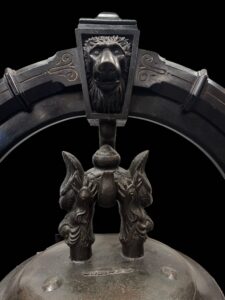
Following the war, the bell was acquired and transported to the United States. The custom bronze display stand was subsequently commissioned in America to mount and display the historic piece within a private estate.
The Tenpō era (December 1830–December 1844) unfolded during the late Edo period under the reign of Emperor Ninkō and the rule of Shōgun Tokugawa Ieyoshi. Throughout the reign of the Tokugawa shogunate, master metalworkers forged a rich variety of temple bells from cast bronze, primarily in two distinct forms:
Bonshō (Buddhist Hanging Bells): Monumental bronze bells designed for major temple complexes. The massive 15-ton Daibonsho at Zōjō-ji Temple in Tokyo, which artisans cast in 1673, remains one of the finest surviving examples of this monumental scale.
Hanshō (Smaller Temple & Watch Bells): Mid-sized bronze bells that marked the passage of hours and warned communities of local emergencies.
Dimensions: 25″ x 33″ x 42″
*Antique piece. Sell in used, pre-owned condition. Vintage and antique items by nature have variable amounts of wear, imperfections, signs of use, age and time. Perfectly imperfect. Condition shown as in pictures. Kindly contact us if you need more info. or detail pictures.
**Due to the size and/ or the delicate situation of the item. Please contact us for more details about picking up /shipping options.
You may also like…


Antique Japanese Zushi Butsudan Buddha
$8,500.00

Antique Bronze Kesu Temple Gong
$1,885.00Related products

Bamboo Xylophone
$300.00
Marble Tang Woman
$120.00
Borneo Baby Carrier
$510.00