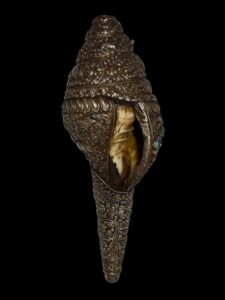

Antique Tibetan Vajrayana Buddhism Silver Shankha
$880.00
Description
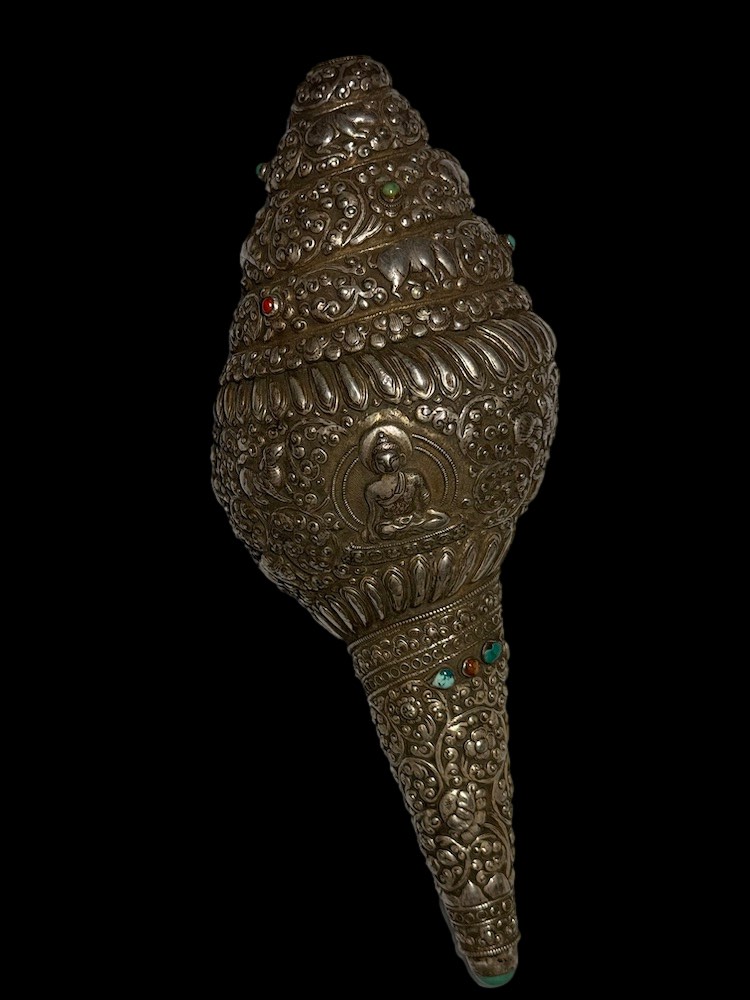
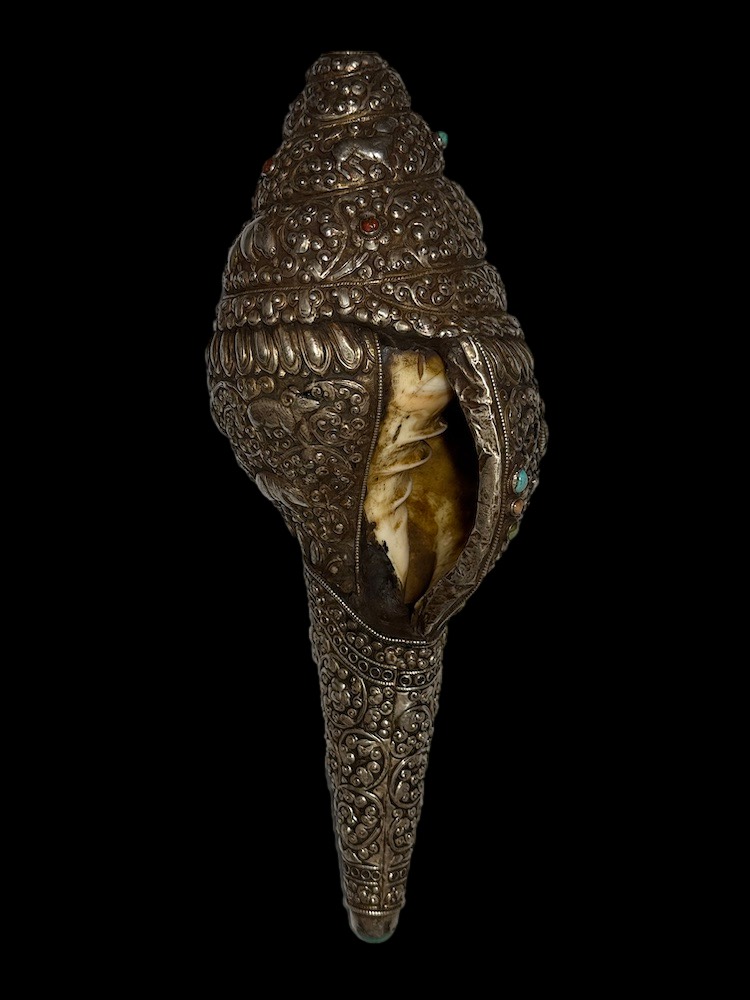
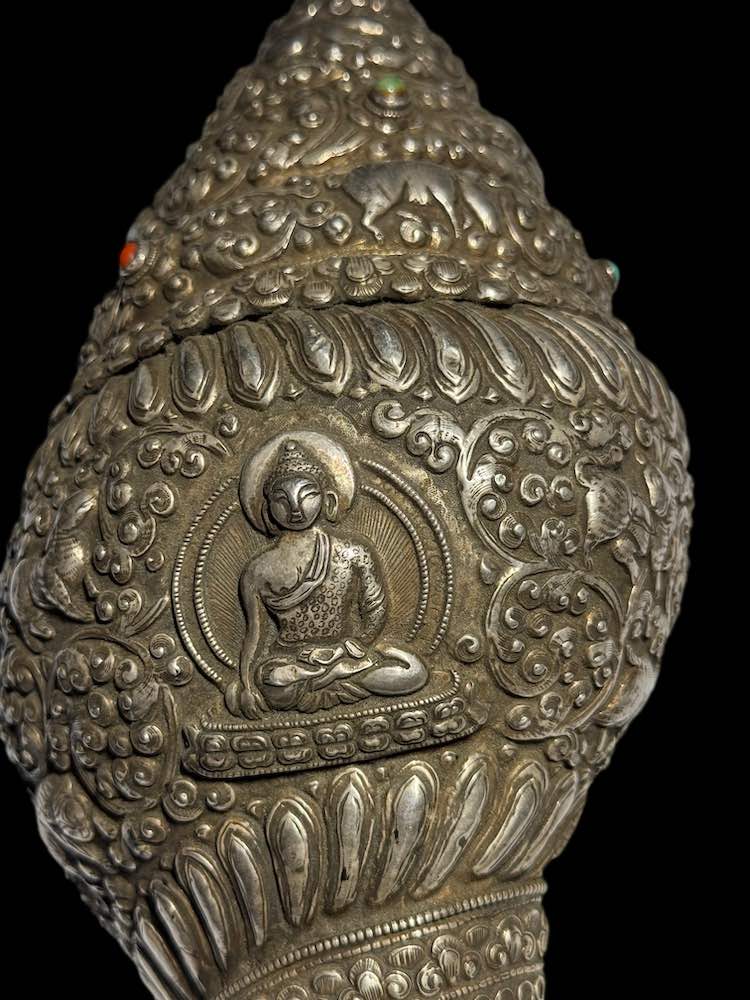
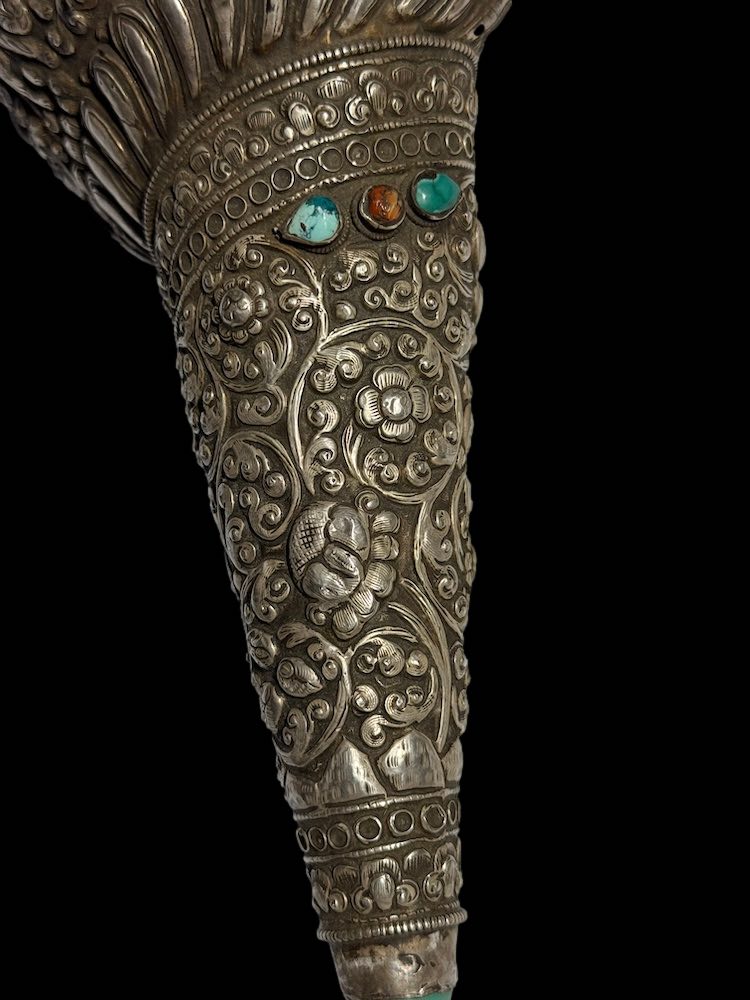
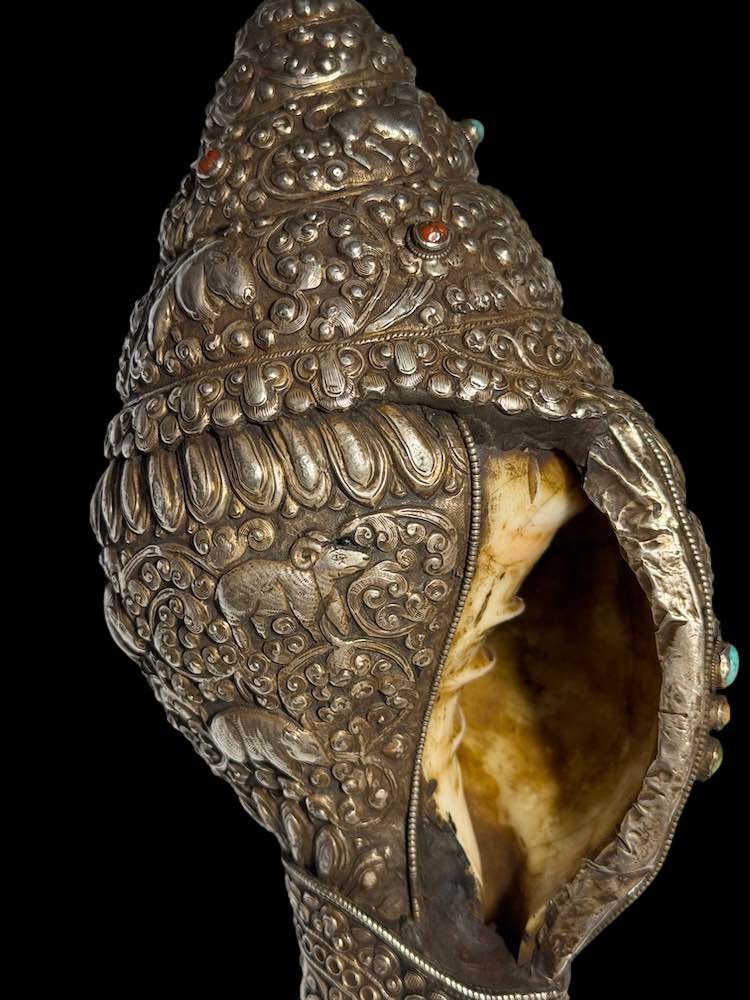
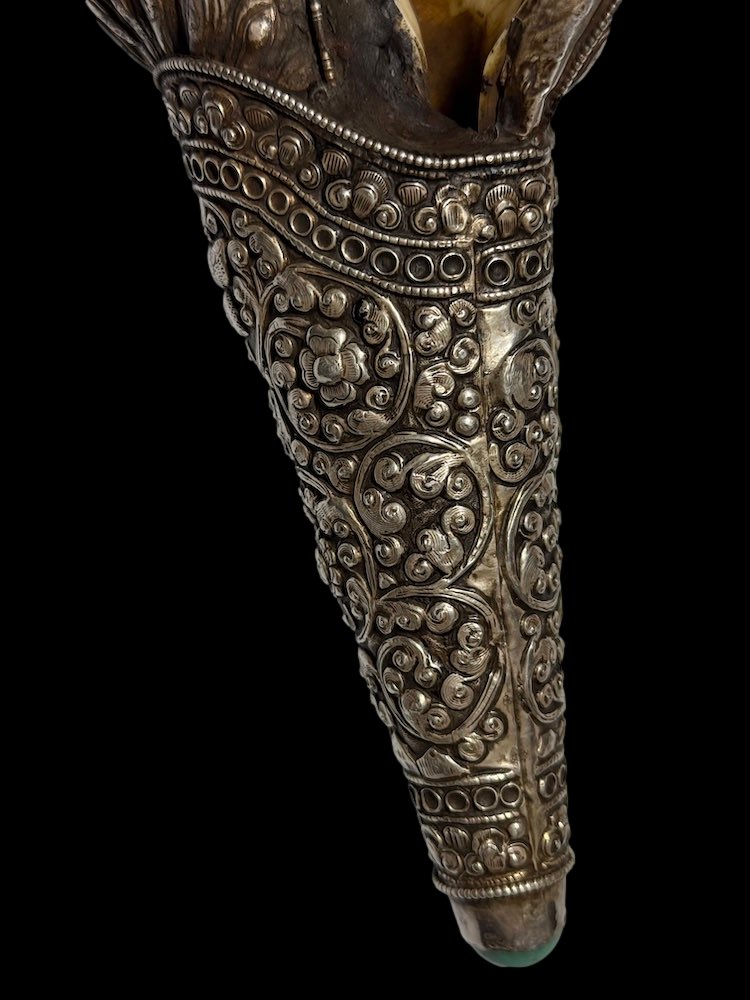
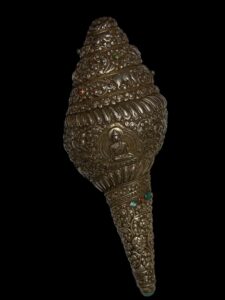
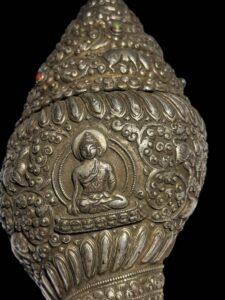
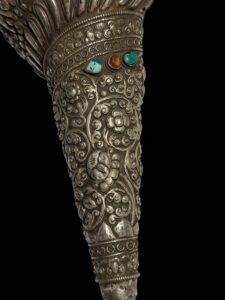
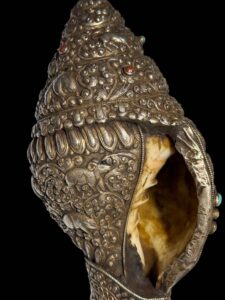
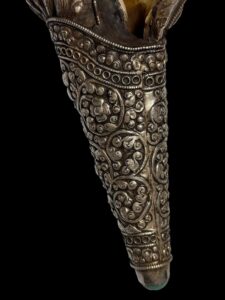
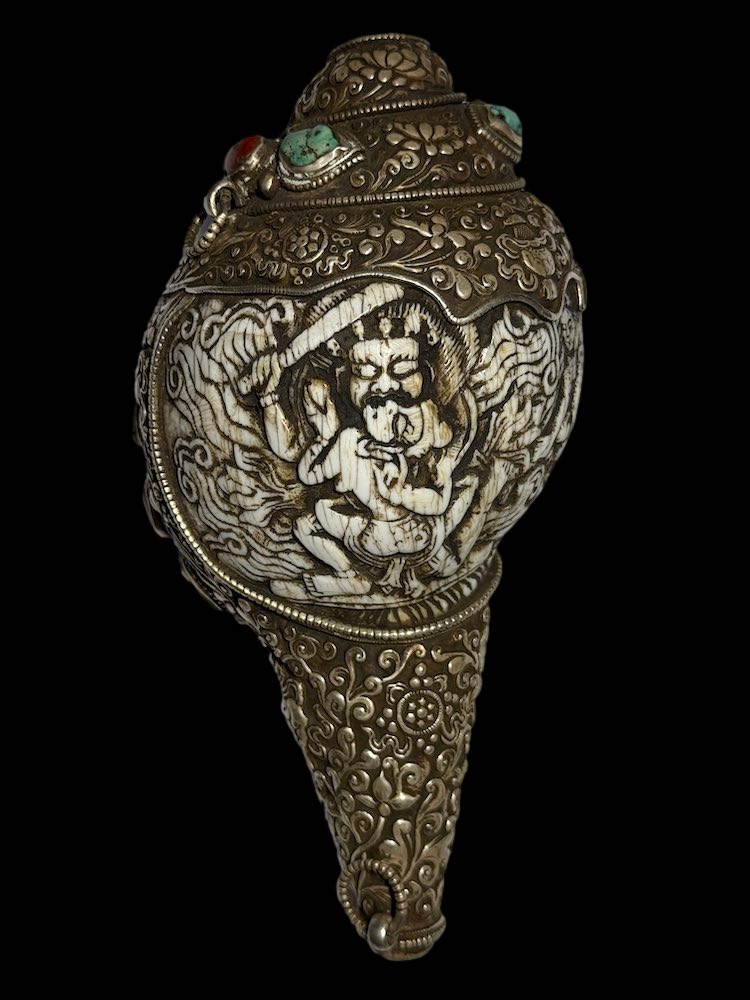
Antique silver shell Shankha used to purify the air during ceremonies. The thick silver was hand carved with Buddha and delicate animal and floral symbols. Which represent Buddha lives among the living beings in the world. Then applied atop the shell and coral and turquoise pieces were set in the silver.
In Tibetan Buddhism (Vajrayana), the shankha—known in Tibetan as the Shankha ( Dungkar or Dhungkar)—occupies a deeply central role, expanding beyond a general Buddhist symbol into a specific, highly active ritual tool and iconographic feature:
The Voice of the Dharma and Monastic Call
Calling to Assembly: Monks blow the shankha from the roofs of Tibetan monasteries or within prayer halls to mark the start of daily prayers, ceremonies, and teachings. Its deep, penetrating tone calling practitioners to gather. Awakening Sentient Beings: The blast of the conch symbolizes the fearless proclamation of the Buddha’s teachings (Dharma). Practitioners believe its sound penetrates illusion and ignorance, piercing the mind to awaken all living beings to their own inner wisdom.
Rare Right-Turning Shankha (Dungkar Yakhyil)
Divine Rarity: Naturally occurring conch shells typically coil to the left. A shell that spirals clockwise to the right (Dakshinavarti) is exceptionally rare in nature and revered in Tibet as a sacred treasure. Historical Tibetan texts record great masters receiving right-spiraling conchs as royal gifts or divine offerings.
Ritual Use as Instrument and Offering Vessel
Ornate Metalwork Mounts: Tibetan craftsmen frequently fit the dungkar with elaborate brass, copper, silver, or gold casings—often encrusted with turquoise, coral, and lapis lazuli—extending into a large wing-like ornamental metal sleeve (wing of the conch) that acts as a amplifier and handle.Offering Vessel for Sacraments: Used horizontally on altars during Tantric puja (offering) ceremonies, the shell holds consecrated water, saffron, or perfumed oils. Because it unifies sound and liquid, it serves as a primary tool for Abhishekam (ritual purification and empowerment blessings).
Symbol of Body and VoiceThe Buddha’s Throat
In Tibetan Buddhist art and sculpture, three horizontal, curved lines depicted on the Buddha’s neck explicitly symbolize the conch-like, resonant quality of his speech. Banishing Obstacles: The vibration of the conch is believed to purify the immediate environment, clearing away negative energies, malevolent spirits, and subtle obstacles before sacred rituals begin.
Only one piece available. originally from Tibet.
Dimensions : 4.5″ x 5″ x 13.25″
Antique piece. Sell in used, pre-owned condition. Vintage and antique items by nature have variable amounts of wear, imperfections, signs of use, age and time. Perfectly imperfect. Condition shown as in pictures. Kindly contact us if you need more info. or detail pictures.
Due to the size and/or the delicate situation of the item. Please contact us for more detail information /pick up or shipping options.
You may also like…

Related products

Antique Lontar Leaf Book
$575.00
Antique Buddhist Sutra
$1,800.00